
Some nuclei emit more low-energy gamma rays than models predict. A ScienceDaily summary of new FRIB/LLNL work suggests the missing ingredient may be magnetic changes inside the nucleus—effectively flips in nucleon magnetic configurations—potentially improving nuclear data used in labs, industry, and astrophysics. Here’s what the source claims, what’s evidence vs inference, and how to treat the result responsibly.
A “Ghostly Ribbon” of Stars as a Dark Matter Detector—What’s Actually New Here?

A ScienceDaily summary reports the first globular-cluster stellar stream detected beyond the Milky Way—an ultra-faint ribbon of stars used to estimate a host galaxy’s dark matter distribution. Here’s what the source claims, what streams actually measure, where the inference is strong vs. model-dependent, and how to read the next wave of coverage without hype.
Repeating near-misses with supermassive black holes: why some stars survive—and why the flares fade

A ScienceDaily summary reports that some stars may repeatedly skim supermassive black holes, flare, survive, and return—sometimes with each flare dimmer than the last. We break down what the source claims, what’s inference, and how rapid stellar spin could (or might not) explain the fading signal.
A “Tiny Big Bang” From Small Nuclei: What the New CERN Claim Actually Means (and What to Verify Yourself)

A ScienceDaily report says CERN physicists produced quark–gluon plasma signatures by colliding surprisingly small nuclei—framed as a “tiny Big Bang.” Here’s what the source claims, what’s evidence vs inference, and a practical checklist for verifying the underlying paper yourself.
NASA on the Sun’s Ancient Past: What It Could (and Can’t Yet) Tell Us About Earth’s Early Habitability

NASA highlights research linking the Sun’s early, more active history to Earth’s early atmospheric and habitability story. Here’s what’s evidence-based, what’s inferred from models and stellar analogs, what remains disputed, and how to read “the Sun shaped Earth” claims without drifting into fiction.
Controlled Transparency: Sharing Sensitive Gravity Research Without Overexposure

A practical, evidence-labeled framework for sharing gravity-adjacent research or sensitive technical findings without turning early data into overhyped claims. Includes what to share, what to redact, how to steel-man explanations, and common pitfalls.
Carbon Removal: Ethical Priorities for Who Pays and Who Benefits

A practical, evidence-conscious guide to the ethics of carbon removal: how to evaluate who pays, who benefits, what’s measured versus modeled, and how to design CDR policies that resist greenwashing, unfair risk shifting, and overconfident claims.
Gravity on the Biggest Stage: What a New Cosmic Test Means for Dark Matter (and for Modified Gravity)

A ScienceDaily report says a new galaxy-cluster-scale test finds gravity behaving close to Newton/Einstein predictions—boosting dark matter interpretations and pressuring some modified-gravity ideas. Here’s what the source claims, what’s inference vs. measurement, and a practical checklist for verifying the underlying paper and systematics yourself.
Michael Herrera on the Shawn Ryan Show: How to Evaluate a High-Stakes UFO/Black Ops Claim Without Losing the Plot (Part 1 of 3)
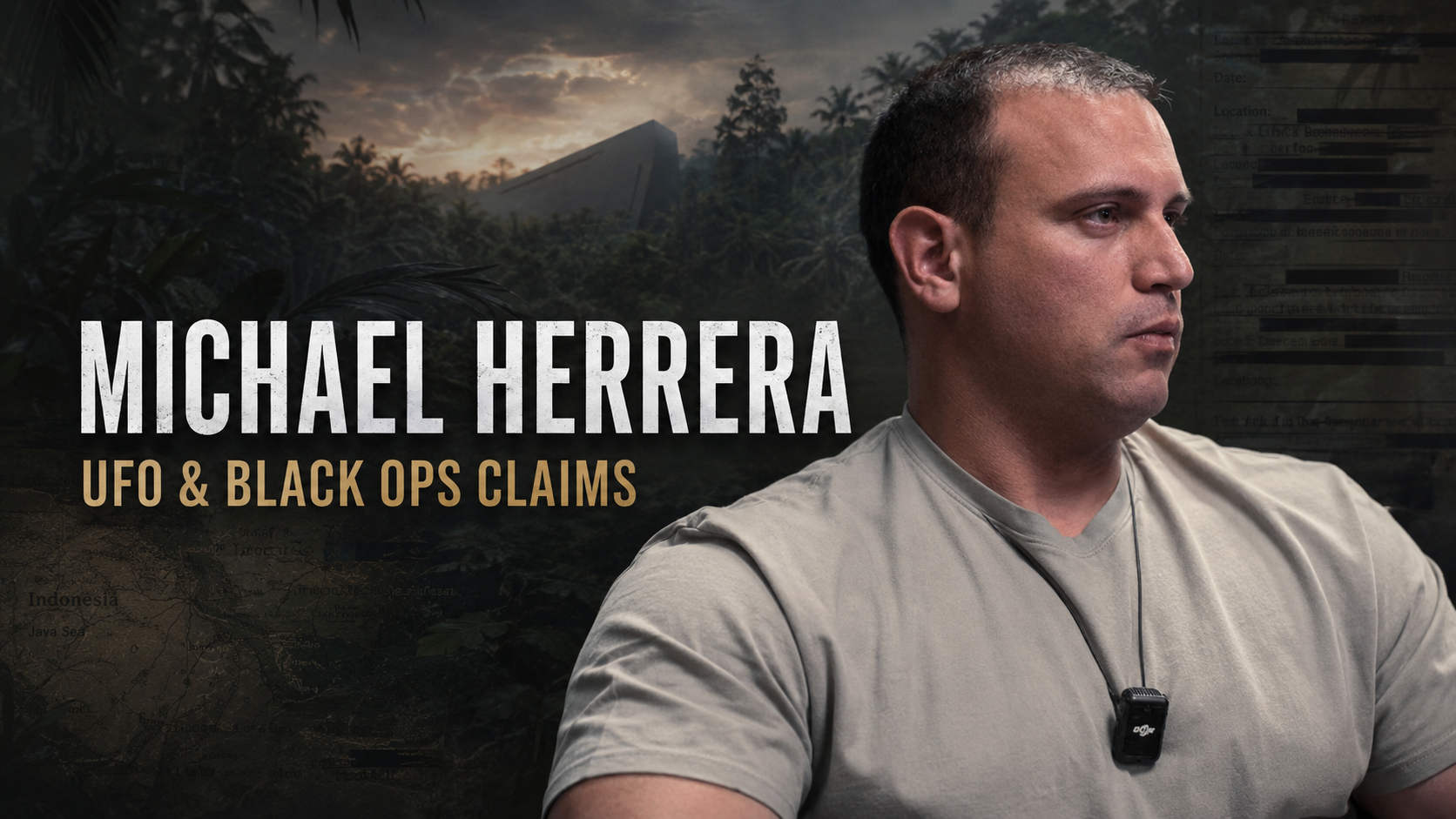
A disciplined, beginner-friendly way to evaluate Michael Herrera’s Shawn Ryan Show claims—what’s testimony vs. inference, what evidence would matter, and how to keep human-rights concerns grounded in verifiable reality (Part 1 of 3).
Chain of Custody for UAP Evidence: What Makes Photos and Video Usable

A practical, evidence-conscious guide to chain of custody for UAP photos and video: how to preserve originals, document transfers, avoid common pitfalls like recompression, and package media so it’s actually analyzable—without overstating what a clip can prove.