Tidal forces are gravity’s gradient—how gravity changes across an object—not just “the Moon pulling the ocean.” Learn a practical way to estimate tidal strength (M/r^3), understand the two-bulge pattern, and see how the same physics scales from Earth–Moon tides to tidal locking and heating in exoplanets.
Deconflicting UAP Reports: A Practical Guide to Ruling Out Satellites, Drones, Balloons, and Astronomical Objects
A practical, evidence-conscious workflow for deconflicting UAP reports—how to rule out satellites, drones, balloons, and bright astronomical objects using time, geometry, reference shots, and common illusion checks, without over-claiming certainty.
UAP Sensor Data 101: How to Interpret Radar, IR, and EO in Case Files (Without Jumping to Conclusions)
A practical, evidence-conscious guide to reading UAP case files that cite radar tracks, IR/FLIR video, and EO footage. Learn what each sensor actually measures, the most common artifacts and pitfalls, and a step-by-step method for cross-checking timelines, geometry, and independence—without sliding into dismissal or sensational certainty.
Did the Solar System “Choose Fire Over Ice” From the Start? A Grounded Look at Chondrules, Icy Dust, and What Iron Meteorites Can (and Can’t) Prove
A curated, evidence-conscious breakdown of a ScienceDaily report claiming that some of the earliest outer Solar System planetesimals were built mostly from heat-formed chondrules, excluding much of the water-rich “matrix” dust—potentially within the first million years of Solar System history. What’s measured, what’s inferred, and what remains uncertain.
How Gravity Shapes Planetary Orbits: Beyond the Two-Body Approximation

The two-body ellipse is a powerful starting point, but real planetary orbits are shaped by many-body perturbations, resonances, tides, lumpy gravity, non-gravitational forces, and sometimes relativity. This evidence-conscious guide shows how to reason beyond the two-body approximation and evaluate orbital “anomalies” without sensational certainty.
When Radar Matches Eyewitnesses: What Counts as Corroboration?

Radar and eyewitness reports can strengthen a case—but only if they’re truly independent and refer to the same event. This guide shows how to test alignment, understand radar limits, avoid common motion-estimate traps, and separate evidence from interpretation.
Disclosure vs. Secrecy: A Framework for Deciding What to Reveal
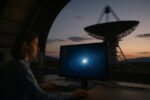
A practical, evidence-conscious framework for deciding what to disclose (and what to keep confidential) in UAP- and gravity-adjacent controversies—without collapsing testimony into proof or secrecy into certainty.
A Taxonomy of UAP Flight Characteristics: Speed, Acceleration, and Loitering
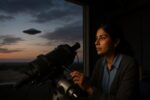
A practical, evidence-conscious taxonomy for describing UAP motion—speed, acceleration, and loitering—without upgrading impressions into physics. Learn categories, a step-by-step workflow, and common pitfalls that inflate “instant” performance claims.
Controlled Transparency: Sharing Sensitive Gravity Research Without Overexposure

A practical, evidence-labeled framework for sharing gravity-adjacent research or sensitive technical findings without turning early data into overhyped claims. Includes what to share, what to redact, how to steel-man explanations, and common pitfalls.
Carbon Removal: Ethical Priorities for Who Pays and Who Benefits
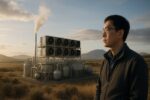
A practical, evidence-conscious guide to the ethics of carbon removal: how to evaluate who pays, who benefits, what’s measured versus modeled, and how to design CDR policies that resist greenwashing, unfair risk shifting, and overconfident claims.