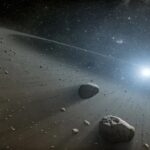
A number of asteroids in our solar system are so dense that no known element on Earth can account for their properties. These asteroids, known as compact ultra dense objects (CUDOs), may be composed of naturally occurring “superheavy elements” that are not listed in the periodic table, according to new research. The existence of these […]
1st evidence of giant exoplanet collision afterglow explains unusual eclipse
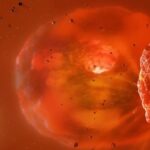
An international team of astronomers has reported the first-ever observations of the aftermath of a collision between two giant planets in another solar system. The collision was first detected in December 2021 when the host star of the planetary system, 2MASS J08152329-3859234, dimmed. Follow-up observations suggest that the dimming was due to an eclipse caused […]
James Webb Space Telescope gazes into a galactic garden of budding stars (image)
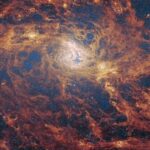
The James Webb Space Telescope (JWST) has captured an image of the galaxy M83, also known as NGC 5236. The image was taken using the telescope’s Mid-Infrared Instrument (MIRI), which observes the universe through infrared wavelengths. M83, a barred spiral galaxy located about 15 million light-years away, is of special interest to astronomers studying star […]
Swirling gas helps scientists nail down Milky Way’s supermassive black hole mass
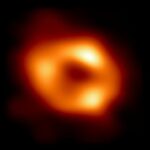
Astronomers from the Max Planck Institute for Extraterrestrial Physics have accurately determined the mass and radius of the supermassive black hole, Sagittarius A*, at the center of our galaxy. The black hole has a mass of 4.297 million solar masses and a radius smaller than Venus’ orbit around the sun. The team used data from […]
Artemis 2 moon astronaut says crew is ready for ambitious 2024 mission

Canadian astronaut Jeremy Hansen is preparing for a historic mission to the moon. As a mission specialist on Artemis 2, slated to launch in 2024, Hansen will be part of the first astronaut mission to visit the moon in over 50 years. This mission will also mark the beginning of NASA’s larger Artemis program. Despite […]
Virgin Galactic launches researchers to suborbital space on 5th commercial flight
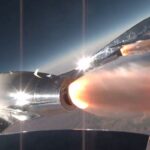
Virgin Galactic’s reusable space plane VSS Unity launched again on November 2, 2023, maintaining the company’s one-mission-per-month pace that began in the spring of the same year. The flight, known as Galactic 05, transported two research scientists and one other private passenger, in addition to VSS Unity’s crew, to suborbital space. This marked the fifth […]
See the world’s largest telescope dwarfed by the Full Hunter’s Moon (photo)
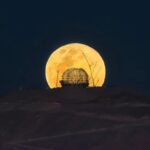
Construction of the world’s largest visible and infrared-light telescope, the Extremely Large Telescope (ELT), is currently underway in Chile’s Atacama Desert. The European Southern Observatory (ESO) recently shared a photo of the telescope’s progress, which is expected to see its first light by 2028. The ELT’s steel skeleton now stands at 80 meters high, and […]
Hubble Telescope just witnessed a massive intergalactic explosion and astronomers can’t explain it
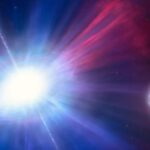
A brilliant flash of light, one of the brightest blue bursts in the universe, was detected in the space between two galaxies over 3 billion light-years away. This rare astronomical event, known as a luminous fast blue optical transient (LFBOT), lasted only a few days. The first LFBOT, discovered in 2018, was up to 100 […]
The James Webb Space Telescope’s tech breakthroughs are already impacting science. Here’s how
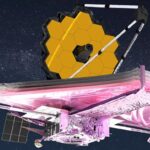
The James Webb Space Telescope (JWST), located about 1 million miles away from Earth, has been capturing stunning images and generating new insights into stars, planets, and galaxies. Additionally, technologies developed for the telescope are benefiting everyday life, including advancements in LASIK technology for eye health and significant improvements to simulation software. The software, Ansys […]
James Webb Space Telescope finds rare heavy chemical element from ‘kilonova’ explosion
NASA’s James Webb Space Telescope (JWST) has detected the rare element tellurium in the aftermath of two neutron stars merging about 1 billion light-years away. The stars were once part of a galaxy but were ejected after one exploded as a supernova. Despite this, they remained gravitationally bound and eventually merged. This event, known as […]