
What is dark matter and why does it matter to us? George Smoot, an expert, discusses the use of this matter and its importance to us in earth. This mass makes up one quarter of all the mass energy in the universe and is the glue that allows the universe to be held together. Key […]
Saul Perlmutter – Why does Dark Matter Really Matter?

George Smoot discusses the study of “Dark Matter”. Smoot describes differences between dark matter and ordinary matter, namely that dark matter expands and cools more rapidly than ordinary matter. He theorizes this dark matter, which has been identified because of its gravitational force, takes the form of a cosmic web that is instrumental in forming […]
Donald Hoffman – Does Consciousness Cause the Cosmos?

Donald Hoffman discusses a monistic theory of the existence of reality. His central claim is that consciousness is fundamental–the physical world exists only through the perceptions of conscious agents. The theory argues the, so-called, objective properties of the universe exist only through the act of observation. Hoffman’s claim that the universe is derivative of experience […]
“Crash Course” A YouTube Channel for Learning

Crash Course: A Comprehensive Guide Introduction to Crash Course Crash Course is an educational YouTube channel that offers high-quality, free educational videos on a wide array of subjects. Founded by the Green brothers, John and Hank Green, the channel was part of YouTube’s original channel initiative, which launched in 2012. The channel aims to make […]
Exoplanets: Crash Course Astronomy #27
Discovering New Worlds: Exoplanets Explored in Crash Course Astronomy Welcome to another deep dive into the cosmos! Today, we’re exploring an engaging episode from the PBS YouTube Channel’s “Crash Course” series. The video titled “Exoplanets: Crash Course Astronomy #27” offers an enlightening look into the fascinating world of exoplanets. Let’s unpack the key points and […]
Burned-up space junk pollutes Earth’s upper atmosphere, NASA planes find
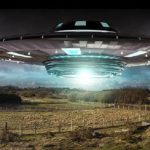
Researchers have detected pollutants in the Earth’s stratosphere that are believed to originate from space junk burning up in the atmosphere. Using high-altitude NASA aircraft, the team found traces of lithium, aluminum, copper, and lead. The concentrations of these compounds were significantly higher than what could be expected from natural sources, such as cosmic dust […]
James Webb Space Telescope spots jet stream on Jupiter stronger than a Category 5 hurricane
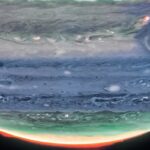
Researchers using NASA’s James Webb Space Telescope have discovered a high-speed jet stream over Jupiter’s equator, previously unseen. This jet stream, which is over 3,000 miles wide and travels at about 320 mph, was spotted above the main cloud decks of Jupiter. The discovery was a surprise to the researchers and highlights that there is […]
The search for extraterrestrial intelligence gets a new home at Oxford
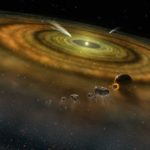
The University of Oxford has been selected as the new international headquarters for the Breakthrough Listen initiative, the world’s largest Search for Extraterrestrial Intelligence (SETI) project. SETI received a significant boost in 2015 with the launch of Breakthrough Listen, a $100-million-dollar private venture focusing on searching for technosignatures, signals from technologically advanced extraterrestrial species. The […]
Snake-like magnetic fields on the sun bring scientists closer to solving a major solar mystery
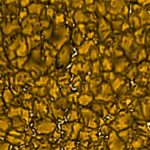
Solar scientists may be closer to understanding why the sun’s outer atmosphere, known as the corona, is significantly hotter than its inner layers. An international team of researchers, using the world’s most powerful solar telescope, the Daniel K. Inouye Solar Telescope in Hawai’i, has observed the sun’s magnetic field in exceptional detail. They discovered complex, […]
A star is born! How cosmic winds are a key step in stellar formation
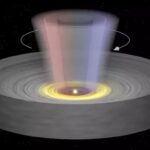
Astronomers have discovered a previously unknown process in star formation which could prevent infant stars from destroying themselves. This process involves “cosmic winds” that circulate around gas and dust clouds, which eventually collapse to form stars. These winds help to slow the spin of the forming stars. This discovery was made by scientists from the […]