
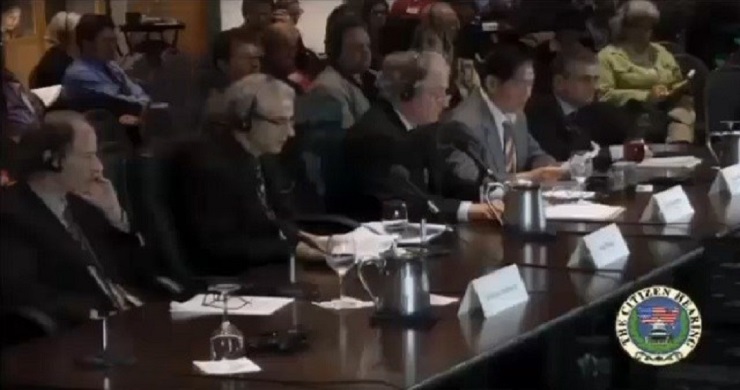
Bottom line: This video asserts that the Chinese government has “confirmed” UFOs and alien life, but the clip (as presented) does not provide verifiable official documents, named agencies, or primary records that would let a reader independently confirm that claim. Treat it as a reported claim until stronger sourcing is produced—and use a simple evidence checklist to separate “UFO topic discussed” from “government confirmation of aliens.”
On Taming Gravity we try to find the science, not the fiction. That means we can take extraordinary assertions seriously while also being strict about what counts as confirmation: official records, named statements, traceable documents, and independently verifiable data.
What the source says
The video’s core message is simple and sweeping: it claims the Chinese government has confirmed that UFOs and aliens are real. It also frames the topic as long-debated, says a Chinese man has spoken to Americans about China’s “UFO issue,” and suggests Chinese scholars have concluded UFOs exist. In the “key takeaways,” it goes further—implying broad public belief in aliens and even the idea that humans are from outer space.
Importantly, the clip (as summarized in the supplied excerpt) does not identify specific Chinese agencies, officials, dates, press releases, or documents that can be checked. That doesn’t prove the claim is false—but it does mean the audience cannot verify it from the information provided in the post alone.
How to evaluate “government confirmed aliens” claims (a practical checklist)
If you want to assess this particular video (and others like it) with a clear head, the key is to distinguish categories of evidence. Here’s a beginner-friendly checklist you can use in under 10 minutes.
1) Did an identifiable official body speak, or is this general “government” language?
- Stronger: a named ministry, research institute, military branch, or spokesperson, with a date and a statement you can locate.
- Weaker: “the government confirmed” with no agency name, no document, no context.
2) Is it a UFO/UAP acknowledgment—or an alien-life conclusion?
Many governments have acknowledged that there are unidentified sightings (UFOs/UAP) worth investigating. That does not automatically mean “alien craft” or “non-human intelligence.” Acknowledging “unidentified” is often an admission of limited information, not a conclusion about origin.
3) Are there primary records you can inspect?
Primary records could include official reports, archived documents, declassified memos, or hearing transcripts. In the U.S. context, a starting point for learning what “official record” looks like includes government repositories and legislative record systems. These won’t verify China’s position by themselves, but they help you recognize the difference between documentation and commentary.
- U.S. legislative record database: Congress.gov
- U.S. National Archives UAP research topic page: National Archives: UAPs
4) What kind of evidence would actually confirm “aliens”?
For a claim as strong as “the government confirmed aliens,” you would expect at least one of the following to be available (even in partial or redacted form):
- Materials evidence with a documented chain of custody and independent lab access (not just anecdotes).
- Sensor corroboration (radar/IR/optical) tied to a specific event with provenance.
- Named testimony that is cross-checkable (who, when, what they saw, where records might exist).
- Official documentation that explicitly states non-human origin—rare, but that’s what “confirmed aliens” implies.
Context that helps interpret this claim (without overreaching)
There are a few reasons “China confirmed UFOs/aliens” headlines spread easily:
- Translation and amplification: A claim can mutate as it moves across languages and platforms—from “UAP research exists” to “aliens confirmed.”
- Institutional opacity: When information environments are opaque, audiences often fill gaps with inference. Opacity is not proof of a hidden conclusion.
- UFO ambiguity: The term “UFO” is popularly synonymous with “alien craft,” even though it literally means “unidentified.”
Common pitfalls when sharing or citing this video
- Overstating what’s shown: If you can’t cite a specific Chinese government statement, avoid repeating “confirmed” as a fact.
- Using public belief as proof: Polls or cultural beliefs (even if accurately described) are not evidence of alien visitation.
- Conflating “scholars conclude” with “the state confirms”: Academic discussion doesn’t equal government disclosure.
- Missing the timeline: Even if there were an official comment somewhere, you need the “when” and “in what context” to interpret it.
Where this fits on Taming Gravity
This post is best read as a structured reality check on a strong disclosure-style claim. If you’re interested in how we approach secrecy, incentives, and evidence standards, see our site framing in Taming Gravity’s manifesto and browse the broader theme in Disclosure & Secrecy. For readers exploring personal reports versus documentation, we also maintain a hub on Ufology & Close Encounters (with careful labeling between testimony and confirmable record).
What would improve this post (if more source material is available)
If you have additional context—such as a full transcript, a named interviewee, screenshots of Chinese-language statements, or a specific reference to a report—those details could be used to upgrade this from “interesting claim” to “checkable assertion.” The key is moving from generalities (“the government confirmed”) to traceable specifics.
FAQ
Did China’s government officially confirm aliens?
Not based on the information presented in this video excerpt alone. The video asserts confirmation, but does not provide a specific official document or statement that can be independently verified from the post.
Is “UFOs are real” the same as “aliens are real”?
No. “UFO/UAP” can mean an object or event that observers could not identify at the time. “Aliens are real” is a much larger claim that requires additional evidence beyond “unidentified.”
What’s the most responsible way to share this video?
Share it as a claim or commentary (“This video says…”) rather than as a confirmed fact. If you want to make a stronger statement, include a checkable primary source (named agency, date, document link) alongside it.
What kind of evidence would count as confirmation?
A clear, attributable statement from a named official body; documentation in an accessible archive; or independently testable physical/sensor evidence with provenance. Without those, the safest label is “unverified.”
Conclusion
The video’s headline claim—“China government confirms UFOs and aliens”—is exactly the kind of statement that demands unusually strong sourcing. As it stands, the content is better treated as an assertion that invites follow-up rather than a conclusion that can be banked as fact. If you want to keep investigating, focus on named agencies, primary records, and evidence categories—then separate what’s documented from what’s inferred.














Leave a Reply