Introduction to Cosmic Structures The Vastness of the Universe The universe is an almost incomprehensibly vast expanse, stretching over 93 billion light-years in diameter. It contains billions of galaxies, each with millions or even billions of stars, planets, and other celestial objects. This immense scale challenges our understanding and imagination, making the study of […]
Epsilon Algorithms to Search for Life as We Don’t Know It to Cosmic Ruins at Milky Way’s Edge (The Galaxy Report)
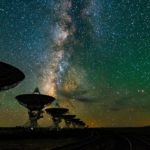
There is a new strategy that a few people at the California Institute of Technology are trying to implement to make it much easier for us to possibly detect life outside our system. This is called an Epsilon machine. Another possibility is that the James Webb telescope will give us some sort of insight of […]
Predicting the Cosmos: AI Algorithms for Advanced Astronomical Research
Introduction to AI in Astronomy The Intersection of AI and Astronomy Artificial Intelligence (AI) has become an indispensable tool in the field of astronomy, revolutionizing the way researchers analyze and interpret vast amounts of data. The integration of AI into astronomical research allows scientists to sift through enormous datasets generated by sky surveys and […]
We Have The First Direct Evidence of a White Dwarf Violently Ripping Apart a Planet
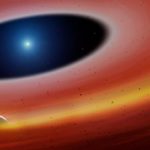
A white dwarf has finally been observed devouring a planet. This scientific feat was achieved by studying x-ray light emitted from a white dwarf, and this x-ray light formed as a result of a planet colliding into the white dwarf. Past observations of the atmospheres of white dwarves were conducted using spectroscopic analysis, which involves […]
Astronomers Find 70 Planets Without Stars Floating Free in the Milky Way
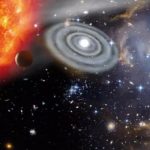
We have found over 70 planets that do not have a star to orbit. We are calling those rouge planets. One of the interesting things about them is that they are not orbiting anything. One issue with it not being close to a star is that it’s hard to get data from it because […]
The Expanding Universe: Insights into Cosmic Acceleration
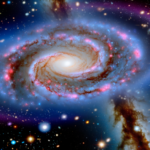
Introduction to Cosmic Acceleration Understanding the Expanding Universe The concept of an expanding universe is fundamental to modern cosmology. It posits that the universe has been growing ever since the Big Bang, approximately 13.8 billion years ago. This expansion is not like an explosion from a central point but rather a stretching of space […]
Breakthrough in the nonlinear generation of primordial gravitational waves
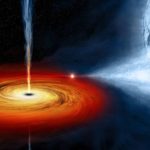
It has always been hard to measure gravitational waves especially in the beginning of the universe. We have just recently discovered a way to do it. This new breakthrough from China and Japan have discovered old gravitational waves in high energy physics when the universe was born. It was found by a phenomenon and then […]
The Warp and Weft of the Universe: Space-Time Explained
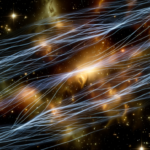
Introduction to the Fabric of the Universe Understanding Space-Time The concept of space-time is fundamental to our understanding of the universe. Introduced by Albert Einstein in his theory of General Relativity, space-time merges the three dimensions of space with the fourth dimension of time into a single, four-dimensional continuum. This framework allows us to […]
Things are getting tense for NASA’s James Webb Space Telescope, literally
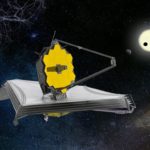
The new James Webb Telescope is the biggest telescope yet. But it has had many problems and delays. At the end of 2021 it was finally released into space to explore the cosmos. Currently, it’s next plan is to unravel the sun shield. That is to protect it from the suns harmful rays. It was […]
How could the Big Bang arise from nothing?
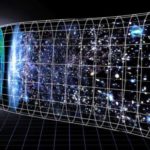
It is thought by some physicists that both the beginning and end of the universe might be the same thing. A cyclical universe model called “conformal cyclic cosmology” has been proposed by Roger Penrose, the 2020 Nobel Prize-winning physicist. According to this view, the Big Bang came about from nearly nothing at all. The conformal […]