
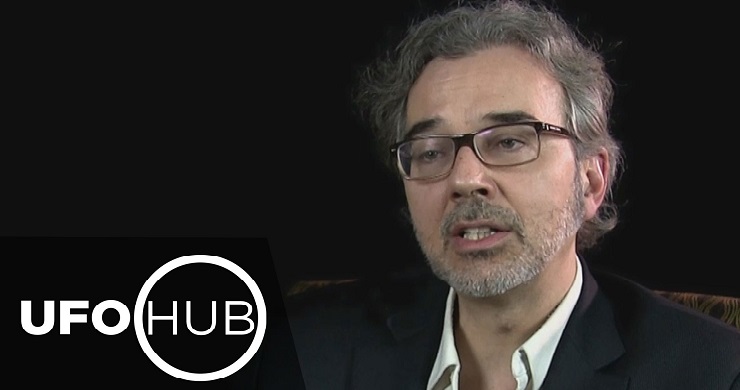
Unpacking Richard Dolan’s Case for the Extraterrestrial Hypothesis and Its Rivals in the UFO Debate
1. Introduction
In this talk, historian and UFO researcher Richard Dolan examines the Extraterrestrial Hypothesis (ETH) as one of the key frameworks for interpreting UFO phenomena. He traces how the ETH emerged and evolved, compares it to competing ideas (interdimensional beings, time travel, etc.), and highlights the weight of declassified evidence and military data supporting serious consideration of ETH. Dolan is cautious but optimistic: he argues that ETH remains a leading candidate among hypotheses, though humanity’s conceptual and technological limits pose serious challenges to fully grasping the implications.
🎥 Watch Richard Dolan lay out the Extraterrestrial Hypothesis before we dive into the key takeaways:
Source: Richard Dolan — The Extraterrestrial Hypothesis
2. Key Points
Below are the major arguments, observations, and tensions Dolan outlines:
A. The historical and cultural persistence of the ETH
- Dolan shows how ETH has had staying power in the UFO discourse: from early post-War flying saucer reports through the modern UAP era, ETH remains a central anchor in popular imagination.
- He observes that many people default to the “aliens in spaceships” image because it’s more tangible, even if scientifically it may be oversimplified.
- Over time, though, more nuance has crept in: the ETH narrative is now often blended with ideas of “high strangeness,” anomalous effects, and non-conventional physics.
B. The competition from alternative hypotheses
- Interdimensional hypothesis: Dolan gives serious weight to the idea that UFOs might come from other dimensions or realms of existence rather than from distant planets. He suggests ETH can’t address all anomalies (e.g. objects behaving as if they defy our laws of physics) and so interdimensional models compete.
- Time travel / future humans: He also references (or alludes to) the possibility that UFOs might be linked to advanced future humanity or temporal travelers.
- He frames these alternatives not necessarily as exclusive of ETH, but as conceptual competitors — or even as sub-variations of it in a broader multiframe of possibilities.
C. Evidence from military, declassified documents, and institutional sources
- Dolan places strong emphasis on the military and intelligence dimension: radar data, pilot reports, cockpit instrumentation readings, and even leaked or declassified documents form a backbone of his argument.
- He argues that these data often surpass mere anecdote: when trained observers (e.g. military pilots) with instrument corroboration report anomalies, the ETH becomes more credible in his view.
- He also talks about institutional suppression, secrecy, and compartmentalization, emphasizing that much of the strongest evidence remains hidden or classified, which in turn complicates public and scientific acceptance.
D. The conceptual challenge of “advanced beings”
- One of Dolan’s recurring cautions is that human conceptual limits may prevent us from fully understanding or modeling what these “visitors” might be.
- He often notes that an advanced civilization operating with physics, consciousness, or technologies far beyond our own could produce phenomena that seem magical or paradoxical to us.
- Thus, ETH carries with it an epistemic humility: even if ETH is “true,” it doesn’t mean we can easily fit it into our existing paradigms.
E. ETH as both hypothesis and working posture
- Dolan doesn’t present ETH as a closed, dogmatic belief; rather, he sees it as the most promising working hypothesis given current data, always open to refinement or integration with other models.
- He encourages openness to cross-pollination: ETH might incorporate or even evolve into hybrid theories that integrate interdimensional, consciousness, or multiversal ideas.
3. Conclusion
Dolan’s overall stance is that the Extraterrestrial Hypothesis remains the most viable framework for many UFO cases — especially those with strong empirical support from military or intelligence sources — though it is not without its challenges. He stresses that ETH’s dominance in public culture is both a help and a hindrance: it anchors the discussion, but also attracts caricature and skepticism. In Dolan’s view, ETH is not the final answer but a lens through which to press forward into deeper inquiry. He calls for humility, openness, and serious investigation, arguing that as more evidence emerges (and perhaps more declassifications occur), ETH may yet reveal deeper layers or transform into more sophisticated theories.
4. Call to Action
Reflect on what Dolan’s perspective implies: if ETH is to be taken seriously, then our scientific, institutional, and cultural frameworks may need to stretch. Ask yourself:
- What would it mean—technologically, philosophically, morally—if advanced extraterrestrials are operating near us?
- Are we prematurely limiting ourselves by insisting on strictly terrestrial or conventional frameworks?
- What kinds of evidence, transparency, or institutional change would shift this debate from fringe to mainstream?
Watch the full video here: Richard Dolan – The Extraterrestrial Hypothesis
If you watch or re-watch the video, jot down which cases or data Dolan presents that feel most compelling to you — and which gaps or conceptual tensions you find most challenging. From there, consider exploring how ETH might dovetail with or coexist alongside competing models (interdimensional, temporal, conscious) in your own thinking.
Related Content:
Reference:
- RichardDolanMembers.com
- UFO HUB (YouTube Channel)














Leave a Reply